
iWatch Africa trains journalists to combat digital threats using new DisinfoEye platform

Accra, Ghana – August 8, 2025 — iWatch Africa has successfully conducted its Online Safety Monitoring Training, a program designed to equip a new team of monitors with the knowledge, skills, and tools to track, document, and report online harassment and abuse directed at journalists in Ghana.
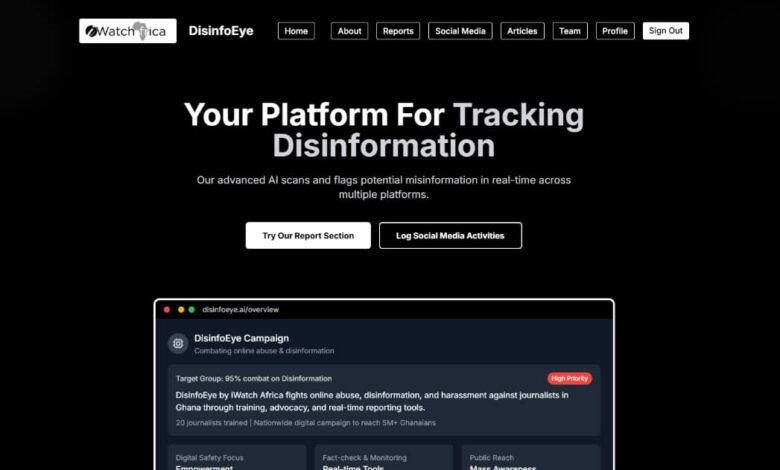
The training is part of a broader initiative to safeguard press freedom, protect media workers from digital threats, and generate credible data to push for stronger accountability and policy interventions. Over the next three months, the trained monitors will observe the social media activities of ten selected journalists across Facebook, X, Instagram, and TikTok. Using DisinfoEye, a purpose-built monitoring platform developed by iWatch Africa, they will document incidents of online abuse in real time.
Philip Kwasi Banini, co-founder, welcomed participants by outlining the key aims of the project: to empower individuals with the skills to identify and resist misleading content; expose disinformation campaigns through data-driven investigations; foster media literacy among vulnerable populations, particularly students and marginalized communities; and collaborate with policymakers and technology companies to promote ethical information ecosystems.
“This initiative is not just about tracking abuse—it’s about protecting the voices that keep our democracy alive. When journalists are silenced by fear, the public loses access to truth,” he stated.
Moro Seidu then delivered a detailed Project Overview and Understanding Online Harassment & Abuse Against Journalists presentation. He explained the different forms of online harassment—such as doxxing, threats of violence, troll campaigns, sexualized abuse, and disinformation attacks—emphasizing that women journalists face unique, gendered, and often sexualized threats. Drawing from UNESCO’s 2021 report, he noted that 73% of women journalists globally have experienced online abuse, with many altering their reporting or abandoning stories entirely due to harassment. Moro also shared trends from iWatch Africa’s data, highlighting the rise of cyberbullying, coordinated troll campaigns, and politically motivated disinformation attacks in Ghana, particularly targeting female reporters after political or investigative stories.
“Online abuse is a global problem, but in Ghana, it threatens press freedom in very real ways. By equipping monitors with the skills to document these attacks, we are building a strong evidence base to push for accountability,” Moro said.
The session moved into a hands-on segment led by Shafui, an IT and Resources Personnel who demonstrated the DisinfoEye platform and guided participants on how to accurately log abuse cases, apply filters and tags, and maintain consistency in reporting. A simulation exercise followed, allowing participants to practice identifying abusive content and entering cases into the platform as if in a live monitoring scenario.
The training concluded with a discussion on reporting requirements, documentation standards, and the project timeline.
This initiative is part of iWatch Africa’s commitment to advancing digital safety, media freedom, and the protection of human rights. The Online Safety Monitoring Program is supported by Impact Amplifier. Members of the public can follow the tracking of online abuse in real time by visiting: www.disinfoeye.com.