
DisinfoEye Project evaluation meeting wraps up with key presentations and strategic next steps

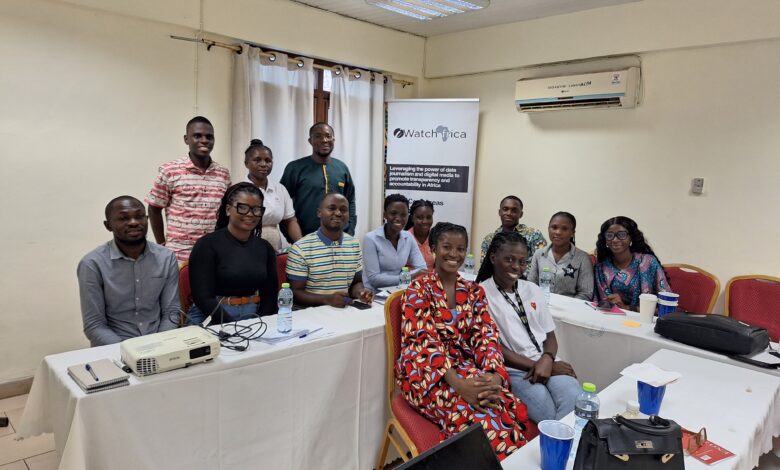
Accra, Ghana – Saturday, 25 October 2025 – The online evaluation meeting of the DisinfoEye initiative, hosted by iWatch Africa, brought together 20 newsroom partners, five trained monitors, and the project team to reflect on achievements, tackle challenges, and chart the road ahead. Notable presentations by Moro Seidu and Philip Kwasi Banini set the tone for informed discussion, leading the agenda from project overview to sustainability strategy.
Presentations that Set the Agenda
Philip Kwasi Banini opened the substantive part of the meeting with a detailed overview of the project’s aims, including empowering journalists, exposing disinformation campaigns and fostering media literacy. He outlined how DisinfoEye is working to generate credible data, collaborate with tech firms and scale its impact across Ghanaian newsrooms.
Moro Seidu followed with a presentation titled “Understanding Online Harassment & Abuse Against Journalists”. He explained the various forms of digital threats – from doxxing and troll campaigns to sexualised attacks – and reviewed trends specific to Ghana, drawn from recent platform data. Seidu emphasised the gendered dimensions of online abuse and the importance of structured monitoring.
Review of Progress & Impact
The project, supported by Impact Amplifier, set four major outcomes: reducing online abuse of women journalists and children; enhancing internet literacy among journalists; establishing tracking and mitigation systems in 20 newsrooms; and educating over 5 million Ghanaians on protecting journalists. Presenters reported that the training of 20 journalists and 5 monitors is complete, all 20 newsrooms have Online Safety Units underway, and campaign outreach is nearing its 5 million-person target.
Monitors confirmed use of the DisinfoEye platform to document incidents in real-time. They highlighted improved detection and flagging of harassment cases, especially those directed at female journalists.
Challenges & Lessons Learned
Discussion flagged key obstacles: restricted access to social-media APIs due to budget limits, uneven newsroom staffing and capacity, and the difficulty of monitoring abuse across local languages and platforms. Seidu’s presentation emphasised that while data-driven monitoring is essential, without platform cooperation and newsroom resources the impact remains limited. The group agreed on the need for shared resource-pools and flexible tools.
Looking Ahead: Sustainability & Scale
The meeting concluded with a call for the next phase: expanding DisinfoEye to 50 newsrooms by 2026, securing funding for advanced analytics and API access, deepening partnerships with tech firms, and launching refresher training for monitors and newsroom staff. iWatch Africa reiterated its commitment to working with regulatory bodies and media houses to institutionalise online-safety protocols.
Why This Matters
As journalism shifts deeper into digital spaces, the training, monitoring and data-generation spearheaded by DisinfoEye become critical to press freedom, especially in Ghana. The insights shared by Banini and Seidu highlight that without structural support and a monitoring ecosystem, online harassment can silence voices, shrink coverage and weaken democratic accountability.
Source: iWatch Africa